tedious
"The writers needed a big finale, and they didn't know what to do with Marissa anymore; she'd been through pretty much everything. I mean, I worked tediously for those three years and my character did a lot." - Mischa Barton, in Teen Vogue, on her departure from The O.C.
Mischa has not made an error, but she has made an interesting choice of words.
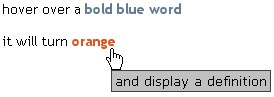
The adjective "tedious" means "overly dull, slow, or boring; monotonous," and the adverb "tediously" means "in a dull, slow, or boring manner; monotonously." Mischa says she "worked tediously," which means that she performed her role as Melissa in a dull, slow, or boring manner for three years. Mischa probably did not intend to characterize her own approach to …
imply,
infer
Proper diction requires an understanding of words that are commonly confused. Understanding grammar errors can make it easier to identify and avoid them.
The verb "infer" means "to draw a conclusion based on given information."
The verb "imply" means "to indicate without making a direct statement."
Although she never states that she does not like her brother, the author implies in her book that they did not have a good relationship.
The reader can infer that the relationship between the author and her brother was not good.
Readers and listeners — people who receive information — infer and make inferences.
Writers and speakers — people who give information — imply and make implications.
In the sample sentence, an author is said to infer something …
case,
pronouns,
who+whom
"Fatherhood only changes you if you allow it to change you. I kind of avoided changing me for a while. I just know that I have somebody who, for the first time in my life, I'm in love with, and it's going to last." - Colin Farrell, in OK Magazine
Colin has made two pronoun errors. He has also used a colloquialism that is considered to be an error by the writers of standardized examinations.
This entry continues with an analysis and description of errors in the quote.
colloquial,
pronoun antecedent agreement
"I have, like, huge enclosed cages all around in the backyard everywhere, so everyone has, like, their own space." - Paris Hilton, describing her collection of animals
This quote contains a redundancy, an error in pronoun/antecedent agreement, and two instances of superfluous colloquialisms.
This entry continues with an analysis and description of errors in the quote.
Proper diction requires an understanding of words and terms in context. Understanding diction errors can make it easier to identify and avoid them.
"I shaved my head when I was 17. I sold it for $500 to a famous Broadway wigmaker. My mother and my brother were so thrilled because my hair had always been so greasy and I always wore it in my face." - Chloe Sevigny, in US Weekly
Chloe has made a confusing statement. She has used a pronoun without clearly stating its antecedent. While it is easy to infer the meaning of her statement, it is instructive to examine this quote to illustrate the importance of clearly defining antecedents when using pronouns.
This entry continues with an analysis and description of errors in the quote.
parallelism,
pronouns,
who+that
Proper diction requires an understanding of words that are commonly misused. Understanding grammar errors can make them easier to identify and avoid.
"I was not the kind of artist that had my mommy hold my hand and my daddy managing my career." - Christina Aguilera in GQ
This sentence contains two errors: an error in pronoun choice and an error in parallelism.
This entry continues with an analysis and description of errors in the quote.
complementary,
complimentary
Proper diction requires an understanding of words that are commonly confused.
The adjective "complementary" means "serving to complete, fill out, or make perfect." Remember that the letter “e” is in both "complementary" and "complete."
The adjective "complimentary" means "favorable; expressing respect or affection; given free."
| This entry continues with example sentences. |
- complimentary tickets
- complementary colors
|
contractions,
couldve+could of,
shouldve+should of,
wouldve+would of
Proper diction requires an understanding of words that are commonly confused.
I could of earned a better grade in the class. I should of studied more. I would of been able to raise my grade point average if I had.
The terms "could of," "should of," and "would of" are incorrect. These are nonstandard homophones of contracted verbs and should never be used in standard written English.
The contractions "could've" ("could" + "have"), "should've" ("should" + "have"), and "would've" ("would" + "have") sound like the nonstandard terms "could of," "should of," and "would of." The latter set of terms should not be used in writing that is meant to conform to the rules of standard written English.
I could have …
adjectives,
adverbs,
modifier confusion
Proper diction requires an understanding of words that are misused.
"I sing to myself and my sister looks at me weird." - Dakota Fanning in BOP
This quote contains an error in modifier form.
Dakota used an adjective to modify a verb, and only adverbs can modify verbs.
"Weird" is an adjective used, in this sentence, to describe how Dakota's sister looks at her. Since "looks" is a verb, an adverb should modify this action. Change "weird" to "weirdly."
"I sing to myself and my sister looks at me weirdly."
Note that the verb "look" can function either as an action verb, as in this sentence, or as a linking verb. A linking verb can connect a subject with an …
pronouns,
subject+verb agreement
Proper diction requires an understanding of words that are commonly misused.
"There's only two people in the world you should lie to: the police and your girlfriend." - Jack Nicholson in In Touch Weekly
This sentence contains an error in subject/verb agreement and an error in diction.
The subject in this sentence is "two people," which is plural. The verb (the contraction form of "is") is singular. Change the number of the verb to plural ("are") to correct this error in agreement.
Jack refers to two people in this quote. However, while "your girlfriend" is a person, "the police" is not a person. "The police" is a group of people. "Police" is a special kind of collective noun, …
pronouns,
who+that
Proper diction requires an understanding of words that are commonly confused.
"I always thought I'd be that girl that lives with no regrets. I have regrets." - Courtney Love
Courtney has used an incorrect relative pronoun.
In the noun phrase "girl that lives with no regrets," the relative pronoun "that" refers to "girl." This is incorrect because "that" should be used to refer only to animals and things. The subjective relative pronoun "who" should be used to refer to a person.
This version of Courtney's statement corrects the pronoun error:
"I always thought I'd be that girl who lives with no regrets."
Note: In the first instance of "that," the word is a demonstrative adjective modifying "girl."
eminent,
imminent
Proper diction requires an understanding of words that are commonly confused.
The adjective "eminent," which means "famous and admired; prominent; high in position or quality," is often confused with the adjective "imminent," which means "likely to happen in the near future."
| This entry continues with example sentences. |
- the eminent scientist
- an imminent storm
|
colloquial,
irregardless,
paradox
Proper diction requires an understanding of words and terms that are not considered to be standard American English.
Irregardless of what anyone may say to the contrary, "irregardless" is not a word.
This paradoxical sentence contains an error in diction and a fundamental concept that may help you answer questions on standardized examinations and improve your speech and writing.
farther,
further
Proper diction requires an understanding of words that are commonly confused.
The words "farther" and "further" have come to be almost interchangeable in standard American English, but there remains a distinction between them that may appear on standardized examinations. Many grammarians and English teachers make this distinction as well, so an understanding of the definitions of these words is useful when making word choices.
1. Bob can throw the ball farther than Sam.
2. Bob can throw the ball further than Sam.
1. We will need to look into this farther.
2. We will need to look into this further.
This entry continues with a discussion of the differences between these two words.
faulty comparisons
"She has more fun than anyone I know on this planet. She's pure passion, that girl." - Hugh Jackman, in People, about his wife Deborra-Lee Furness
Hugh has made a type of faulty comparison that is commonly found in questions on standardized examinations. The comparison in the first sentence is between "she" (his wife) and "anyone I know on this planet." The literal interpretation of Hugh's statement is that his wife does not live on this planet because comparing her to a group of people excludes her from the group.
To make a logical comparison, insert "else" into Hugh's sentence:
"She has more fun than anyone else I know on this planet."
This syntax creates a comparison between Hugh's wife and anyone else …
nouns
"It is obvious to me that there is an overwhelming amount of women, of actors I look at, and they're too thin for my taste." - Scarlett Johansson, on the pressure in Hollywood for women to stay exceedingly slim
Scarlett has made an error in diction. She has used "amount" in place of "number."
The word "amount" is used to quantify nouns that are uncountable. Since "women" is a countable noun, the correct word to use is "number."
This version of Scarlett's statement corrects the error:
"It is obvious to me that there is an overwhelming number of women, of actors I look at, and they're too thin for my taste."
double negative
"I was trying to submerge myself in everything - the culture, the food, the coffee shops, everything - and the people were really helpful to me. They really were supportive of the movie. I didn't really meet hardly anyone who wasn't supportive of the film." - Forest Whitaker, on the people of Uganda's reaction to the production of The Last King of Scotland
Forest has used a double negative in the last sentence of his statement. While this type of construction is common in colloquial speech, it often appears in questions on standardized examinations with the expectation that it will be recognized as an error.
The phrase "didn't really meet hardly anyone" contains a negative (the contracted form of "not") that …
lay+lie
"I remember lying in bed, thinking I wanted to die on the spot. I would say, 'Please don't let me wake up. I can't face another day.'" - Alec Baldwin, about how he felt about living with his ex-wife Kim Basinger
Alec has avoided a very common error in diction. The verbs "lay" and "lie" are commonly confused, but Alec correctly chose to use the present participle of the intransitive verb "lie" ("lying") to express that he was reclining in bed. Alec did not say, "I remember laying in bed," which would have been incorrect because "lay" is a transitive verb that means "to place."
Very nice, Alec!
colloquial
Proper diction requires an understanding of words and phrases that are not standard American English.
The word "because" is a conjunction that means "for the reason that."
The reason I am hungry is because I did not eat lunch.
While this sort of diction is common in colloquial speech, it contains a redundancy according to the rules of standard American English. It is not necessary to have two words that the convey the same meaning in one sentence. Replace "because" with its definition to illustrate the redundancy.
The reason I am hungry is for the reason that I did not eat lunch.
To correct the original sentence, either replace "because" with "that" or remove …
colloquial
Proper diction requires an understanding of words and terms that are not standard American English.
Being that the weather was sunny, we went to the beach.
This sentence contains an error in diction. "Being that" is a colloquial phrase that should not be used in formal language or standard written English. Use "because" or "since" instead.
Since the weather was sunny, we went to the beach.
literally
Proper diction requires an understanding of words that are commonly confused.
A controversy surrounds the meaning of the word "literally." Its definitions include both "actually; without exaggeration or error" and "in effect; virtually."
"He was laughing so hard that he literally had a heart attack and died. The funeral is tomorrow."
In this sentence, the use of "literally" indicates that, actually and without exaggeration, he died. It provides information to avoid confusion, because the exaggeration "had a heart attack and died" is often used figuratively for emphasis.
"I was laughing so hard that I literally had a heart attack and died."
In this sense, "literally" is used figuratively to mean "virtually." This contradiction in meaning is pure hyperbole used for intensive …
among+between
Proper diction requires an understanding of words that are commonly confused.
A controversy exists among grammarians, English teachers, writers, and word enthusiasts regarding the use of the word “between” with more than two items.
Some people believe that “between” should be used only when two items are listed (”between you and me”) and “among” should be used in cases involving more than two items (”among you, me, and that other guy”).
Others believe that “between” may be used with more than one item if it does not refer to distribution: “this argument is between you, me, and that other guy” is acceptable, but “divide this between you, me, and that other guy” is not.
The writers of standardized examinations treat …
adjectives,
adverbs,
colloquial
Some words and phrases tend to weaken the effect of a piece of writing because they do not enhance the meaning of the document. Consider avoiding these vague expressions and "empty" modifiers that add little value to your writing.
pronouns,
who+whom
The usage of the indefinite relative pronouns "whoever" and "whomever" can be confusing, especially in sentences in which one of these pronouns is part of the object of a preposition. When you are determining which pronoun to use in a sentence, remember that "whoever" is in the subjective case and "whomever" is in the objective case.
Should the pronoun in the following sentence be "whoever" or "whomever"?
He will give his extra ticket to [whoever/whomever] I choose.
This sentence contains a prepositional phrase: "to [whoever/whomever] I choose." The object of the preposition is the entire noun clause "[whoever/whomever] I choose."
These are the components of the noun clause:
- subject: "I"
- verb: "choose"
- direct object: "[whoever/whomever]"
Follow these steps to determine which pronoun to use:
1. Rearrange the words …
everyday
The adjective "everyday" means "happening every day" and, perhaps because a routine can be perceived as relatively uninteresting, "ordinary." Remember that "everyday" is one word: it is an adjective used to describe a noun and answer the question "How is it?" It is "ordinary"; it is "commonplace"; it is "everyday."
The adverb phrase "every day" means "each day." It answers the question "When does it happen?" It happens "every day."
A common error in writing is the use of the adjective "everyday" in place of the adverb phrase "every day" to answer the question "When?"
This is an incorrect use of an adjective in place of an adverb.
If you are describing when something happens, remember that the adverb phrase …